A 1031 Exchange is one of the most powerful tax-deferral tools available to real estate investors. For new (and even experienced) Arizona investors, understanding how a 1031 works can be the difference between slow growth and compounding long-term wealth.
This guide breaks down the essentials in a warm, straightforward, Arizona-specific way—without unnecessary jargon.
What Is a 1031 Exchange? (Simple Definition)
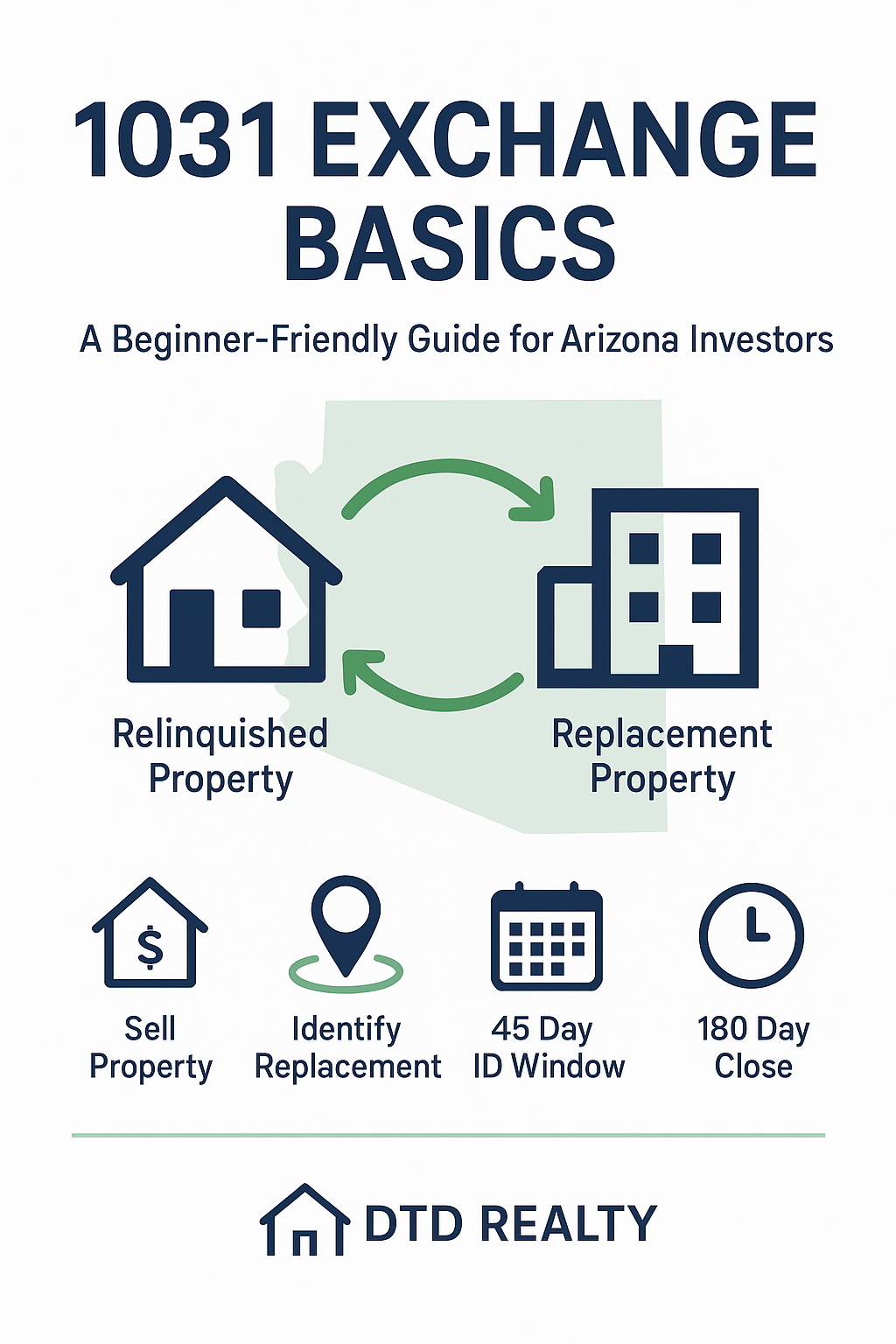
A 1031 Exchange allows real estate investors to sell an investment property and roll the profits into another investment property without paying capital gains taxes at the time of sale.
The tax is deferred—not eliminated—but deferral can dramatically accelerate portfolio growth.
Why Arizona Investors Use 1031 Exchanges
1. Scale Up: Trade One Property Into a Larger Asset
Example: Sell a condo in Mesa → Buy a larger fourplex in Phoenix.
This is the classic “level up” move.
2. Diversify: Trade One Property Into Several Properties
Example: Sell a single rental in Chandler → Exchange into three cash-flowing single-family homes in Tucson + Surprise + Goodyear.
This is extremely popular with investors who want:
- better geographic diversification
- more stable cash flow
- more flexibility for future sales
- protection against local market volatility
This “one-to-many” diversification strategy is 100% allowed under IRS rules.
3. Improve Cash Flow or Reduce Risk
Example: Swap out of an older, high-maintenance Tempe property → into a newer build in Queen Creek with fewer repairs.
4. Move Closer to Home or Change Markets
Example: Exchange out of a property in another state → into Arizona where you want more control or better returns.
5. Consolidate (Many Into One)
Example: Sell several small Arizona rentals → Exchange into a professionally managed NNN commercial property.
Great for investors approaching retirement.
What Qualifies as a Like-Kind Exchange?
“Like-kind” does NOT mean the properties must be identical.
The IRS allows exchanges between any real property held for investment or business use, including:
- single-family rentals
- multifamily
- commercial property
- land
- industrial
- mixed-use
Primary residences do NOT qualify.
And for short-term rentals, qualification depends on how the property is used. Not all STRs qualify automatically (for example, if personal use is too high or if operational structure doesn’t meet IRS expectations). Because STR qualification is nuanced, always consult a tax professional.
Key 1031 Exchange Deadlines (Non-Negotiable)
1. 45-Day Identification Window
You must formally identify replacement property within 45 days of closing on the property you sold.
2. 180-Day Closing Window
You must close on the replacement property (or properties) within 180 days.
These clocks run at the same time, and extensions are extremely rare.
3 Common Identification Methods
1. The Three-Property Rule
Identify up to 3 properties—buy any one or more of them.
2. The 200% Rule
Identify any number of properties, as long as the total value doesn’t exceed 200% of the property you sold.
3. The 95% Rule
Identify any number of properties and buy 95% of the total value listed.
Rarely used, but powerful for large diversified acquisitions.
What Happens If You Take Cash Out? (Boot)
If you receive:
- cash
- debt relief
- leftover funds not reinvested
…that amount is called boot, and it becomes taxable.
How Arizona Investors Typically Use 1031 Exchanges
Entry-Level Investor Strategy
Sell a condo → Buy a small SFH rental in the West Valley.
Goal: Better rents, lower HOA fees, stronger appreciation.
Mid-Level Investor Strategy
Sell a single-family older home with significant equity → Buy two newer homes in growth markets (Maricopa, Buckeye, San Tan Valley).
Goal: Reduce repairs + boost long-term appreciation potential + leverage debt to grow portfolio.
Advanced Investor Strategy
Sell several residential assets → Exchange into NNN commercial or multifamily.
Goal: Lower management burden + passive income.
Pitfalls to Avoid (Beginner-Friendly)
- Missing the 45- or 180-day deadlines
- Taking possession of funds (must use a qualified intermediary)
- Trying to exchange property that was primarily used personally
- Trying to “improve” the property during the exchange timeline without proper planning
- Assuming your short-term rental qualifies without tax guidance
Working With DTD Realty for Your 1031 Strategy
1031s are powerful—but highly technical.
My role is to help Arizona investors:
- strategically identify suitable replacement properties
- run cash-flow models
- analyze DSCR, rent growth, and insurance
- coordinate the timeline with the intermediary
- ensure the investment actually meets your long-term goals
A 1031 only works if the replacement property is truly an upgrade.
Important Tax Disclaimer
This post is for educational purposes only.
Always consult a qualified CPA, tax attorney, or 1031 specialist before making decisions. Individual situations vary and tax laws change.
DTD Realty — Do The Deal.
Driven. Trusted. Dependable.
📞 602.702.3601
🌐 https://www.dtdrealty.com
📩 [email protected]